


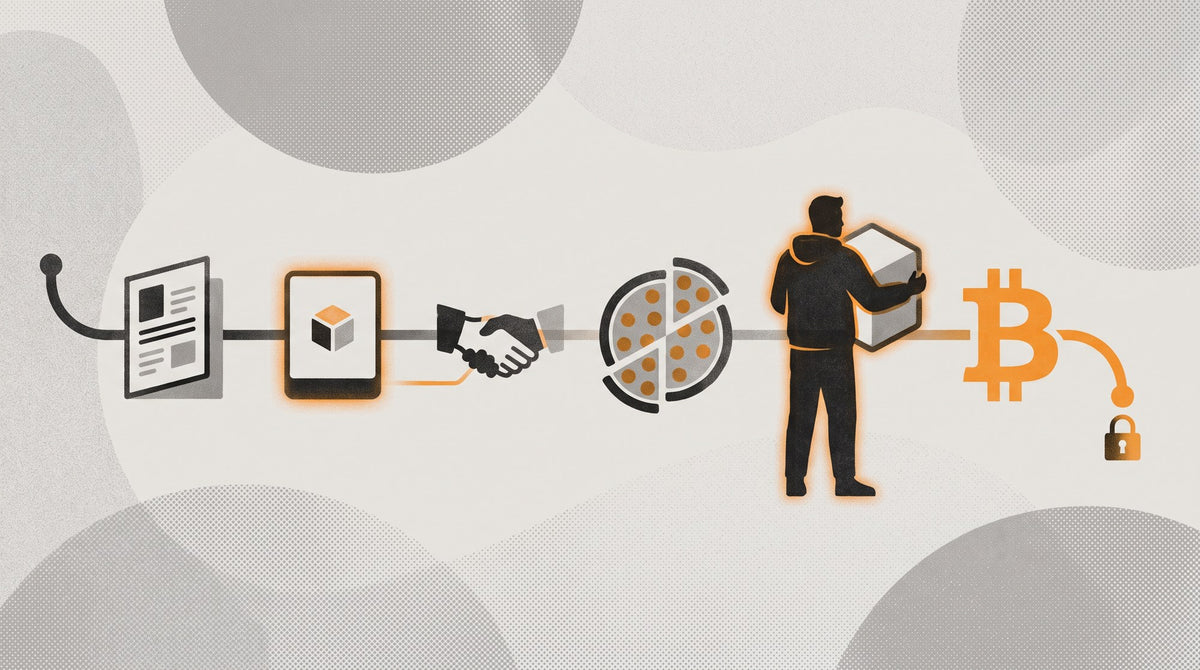
The core Bitcoin History Facts, in Order: the Whitepaper on 31 October 2008, the Genesis Block on 3 January 2009, the first Transaction to Hal Finney on 12 January 2009, Pizza Day on 22 May 2010, the HODL Post on 18 December 2013, and a Halving every 210,000 Blocks that Caps Supply at 21 million Coins. The Rest is Commentary.
Before Bitcoin: the ideas it builds on
Bitcoin did not appear from Nothing. Digital Cash had been attempted for Decades, starting with David Chaum's ecash in the 1980s. Every Attempt solved one part of the Problem and broke on another.
In 1992 the Cryptographers Cynthia Dwork and Moni Naor proposed that Solutions to computational Puzzles could carry Value. Adam Back rediscovered the Idea independently and built Hashcash in 1997, a Proof-of-Work Scheme against Spam. The Machinery for Scarcity existed. The Money did not.
Why the earlier Systems failed
In 1998 the Cypherpunks Wei Dai and Nick Szabo published b-money and bit gold, the first Proposals for distributed, Scarcity-based digital Money. In 2004 Hal Finney built the first Currency based on reusable Proof of Work. None of them reached everyday Use, and the Reasons are worth knowing.
Chaum's Concept required central Control, and no Bank signed on. Hashcash had no Protection against Double-Spending. b-money and bit gold were not resistant to Sybil Attacks, so an Attacker could simply pretend to be a Crowd.
What was missing was a Way for Strangers to agree on one Ledger without a Referee. Proof of Work, a Chain of Blocks and a fixed Issuance Schedule closed that Gap together, not separately. Everything that follows in this Timeline is the Consequence of those three Pieces clicking into Place.


The Whitepaper and the Genesis Block
On 31 October 2008 Satoshi Nakamoto posted a Link to a Cryptography Mailing List. The Paper was titled Bitcoin: A Peer-to-Peer Electronic Cash System. No Funding Round, no Company, no Launch Event.
The Groundwork was already laid: the Domain bitcoin.org had been registered on 18 August 2008, Weeks before the Paper went out. The Timing sat in the Middle of the Banking Crisis, and the Document read as an Answer to it.
On 3 January 2009 the Genesis Block, Block 0, was mined. Its Coinbase carries a Line from The Times: Chancellor on brink of second bailout for banks. That Sentence is a Timestamp and a Statement of Intent in the same Field, which is why Bitcoiners still quote it. Our Post on the line that started the Whitepaper goes through it Word by Word.
The first Transaction
On 12 January 2009, in Block 170, Satoshi Nakamoto sent 10 BTC to Hal Finney. That was the first Bitcoin Transaction between two People, and Finney had spent Years building toward exactly that Moment with reusable Proof of Work.
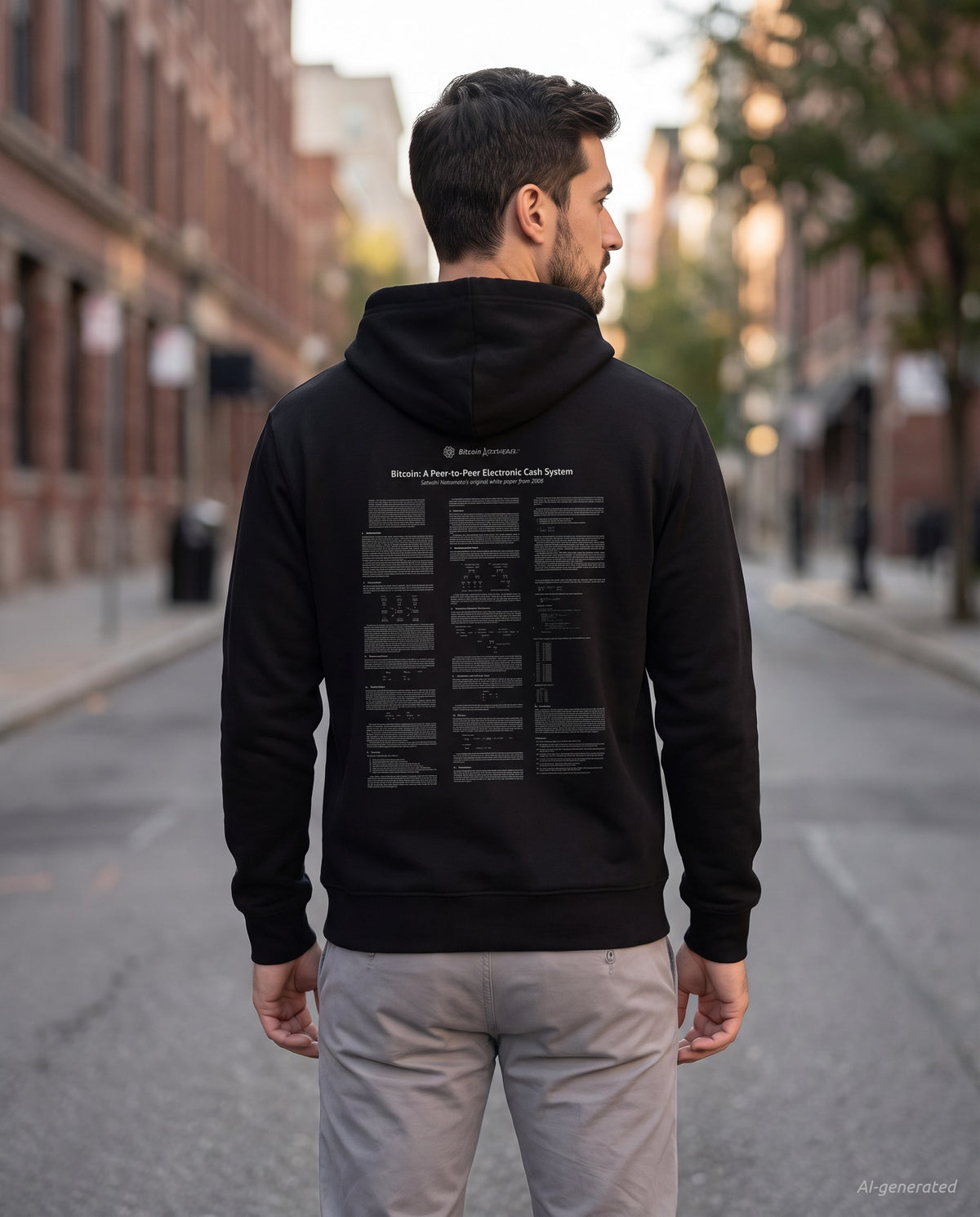
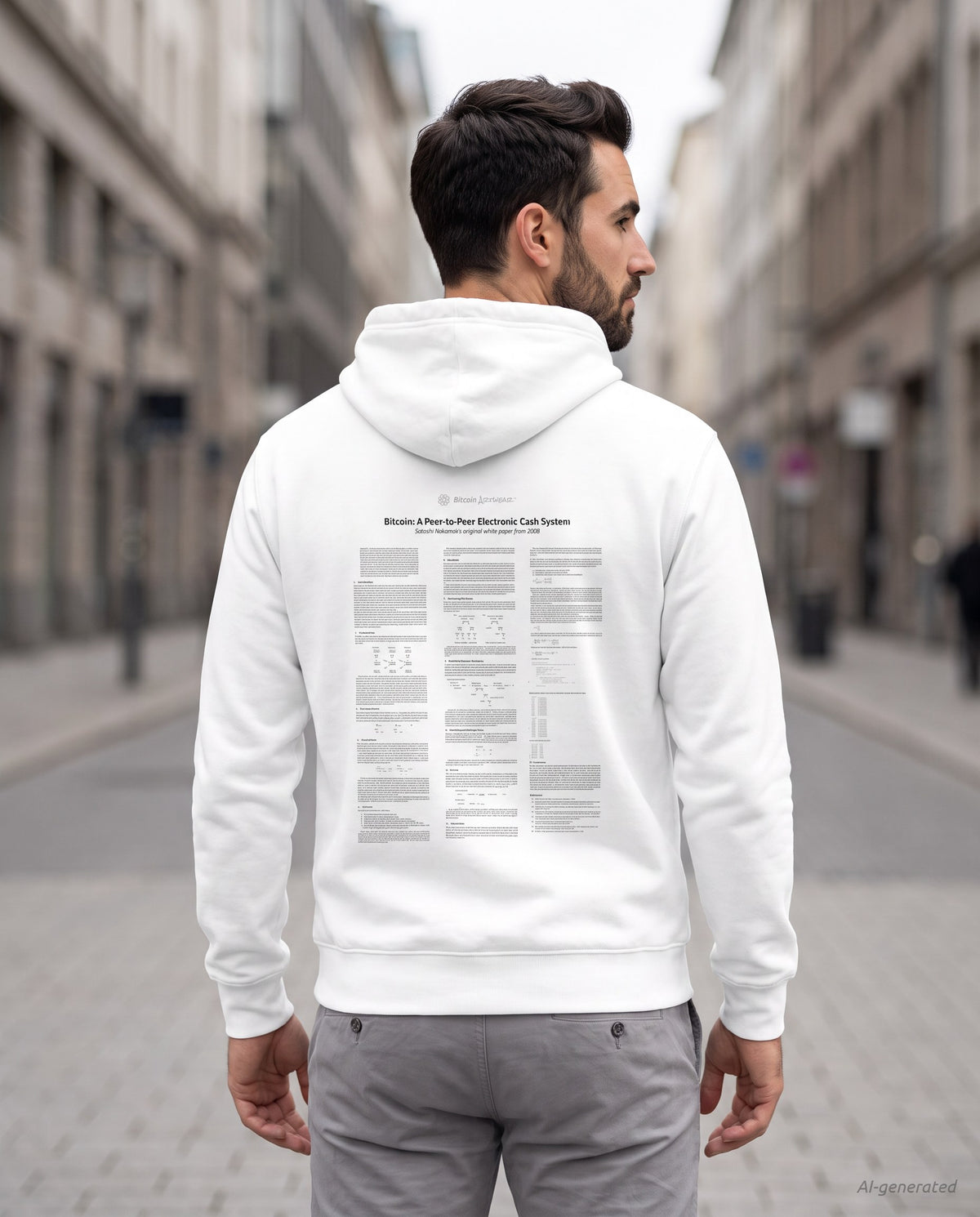
Nine Pages turned into a running Network inside ten Weeks. That Compression is the Reason the Document itself became an Icon, printed, framed and worn. The Bitcoin Whitepaper, Nine Pages on the Back Hoodie exists for Bitcoiners who want the full Text on their Shoulders rather than in a Bookmark Folder.
Pizza Day and the birth of HODL
On 22 May 2010 Laszlo Hanyecz paid 10,000 BTC for two Pizzas. It was the first known Purchase of a real Good with Bitcoin, arranged on a Forum, settled Peer to Peer. The Date is celebrated every Year as Bitcoin Pizza Day.
Bitcoiners do not retell it as a Mistake. They retell it as Proof: the Network moved Value between Strangers for something you can eat, with no Bank in the Middle. The Protocol worked in Public.
Three Years later, one Typo
On 18 December 2013 a Forum Post went up on BitcoinTalk with the Title I AM HODLING. The Writer admitted he was a bad Trader and would simply keep his Coins. The misspelled Word outlived every Chart it was written next to.
HODL became the shortest Description of a Strategy in Bitcoin: hold, do not react, do not hand your Coins to someone who promises to look after them. The Logic ends at the Keys, which is why the Meme and holding your own Keys in Self Custody are the same Conversation.
Two Dates, two Lessons. Pizza Day shows Bitcoin spends. HODL shows what most Owners decide to do instead.


The Halving schedule and the 21 million Cap
The Numbers behind Bitcoin's Monetary Policy are fixed and public. They are the Part of the History that does not depend on Memory, because the Network enforces them Block by Block.
- One Bitcoin is 100,000,000 Satoshis, and the Satoshi is named after Satoshi Nakamoto.
- Total Supply is capped at 21 million Coins, 21,000,000 BTC.
- A new Block is found roughly every 10 Minutes on Average.
- The Mining Difficulty adjusts every 2,016 Blocks, roughly every two Weeks.
- The Block Subsidy halves every 210,000 Blocks, roughly every four Years.
Four Halvings so far
Halvings happened in 2012, 2016, 2020 and 2024. The fourth, at Block 840,000 in April 2024, cut the Block Subsidy to 3.125 BTC. Each one arrives on Schedule because the Rule lives in the Software every Node runs, not in a Committee.
The Difficulty Adjustment is the Counterweight. If more Hashpower joins, Blocks come faster, and the Network tightens after 2,016 Blocks to pull the Average back toward 10 Minutes. Issuance stays on Track whoever is mining.
Follow the Schedule forward and the last Bitcoin is expected to be mined around the Year 2140. After that, Miners are paid by Transaction Fees alone. A Bitcoiner reading these Facts does not need a Chart to understand the Point: the Supply Side of Bitcoin was decided once, in Code, and has not moved since the Genesis Block.
Why these facts still matter when you wear them
These Dates stopped being Trivia a long Time ago. 31 October, 3 January, 22 May: Bitcoiners mark them, argue about them and build Memes on them. They work as Shorthand, the Way a Flag or a Jersey works, and a Stranger either reads the Signal or does not.
That is the Logic behind our Prints. A Whitepaper on a Back is a whole Argument carried through a Room. The Bitcoin Symbol is the Mark that connects every Holder since Block 0. Nothing on the Garment needs explaining to the People it is meant for.
History you can put on
Our Bitcoin Hoodies carry these Statements in heavyweight Form, in a classic Fit, with the Print doing the Talking. Every Piece is printed after the Order by our Production Partner, in the Production Site closest to the Buyer, so there is no unsold Stock sitting in a Warehouse.
We write about Bitcoin's Story because we hold Bitcoin, not because it sells Cotton. Our Vision sets out why we turn that Story into Artwear you can wear on a Monday Morning.
Can a T-shirt change the World? Probably not. But the Person wearing it just might. We make the Artwear. You spread the Word.
Wear the Bitcoin Revolution.


Questions
What is the real Story behind Bitcoin?
A Paper titled Bitcoin: A Peer-to-Peer Electronic Cash System was published by Satoshi Nakamoto on 31 October 2008, after Years of failed Digital Cash Attempts from ecash to Hashcash, b-money, bit gold and reusable Proof of Work. The Genesis Block was mined on 3 January 2009 with The Times Headline Chancellor on brink of second bailout for banks in its Coinbase. On 12 January 2009 Satoshi sent 10 BTC to Hal Finney in Block 170, and the Network has run ever since.
What are some interesting facts about Bitcoin?
One Bitcoin is 100,000,000 Satoshis, named after its Creator. Supply is capped at 21,000,000 BTC, a new Block arrives roughly every 10 Minutes, and the Difficulty adjusts every 2,016 Blocks. The Subsidy halves every 210,000 Blocks, with Halvings in 2012, 2016, 2020 and 2024, the fourth at Block 840,000 cutting it to 3.125 BTC. On 22 May 2010 Laszlo Hanyecz paid 10,000 BTC for two Pizzas, and HODL comes from a BitcoinTalk Post titled I AM HODLING on 18 December 2013.








Sharing is caring:
What does self custody mean in Bitcoin