


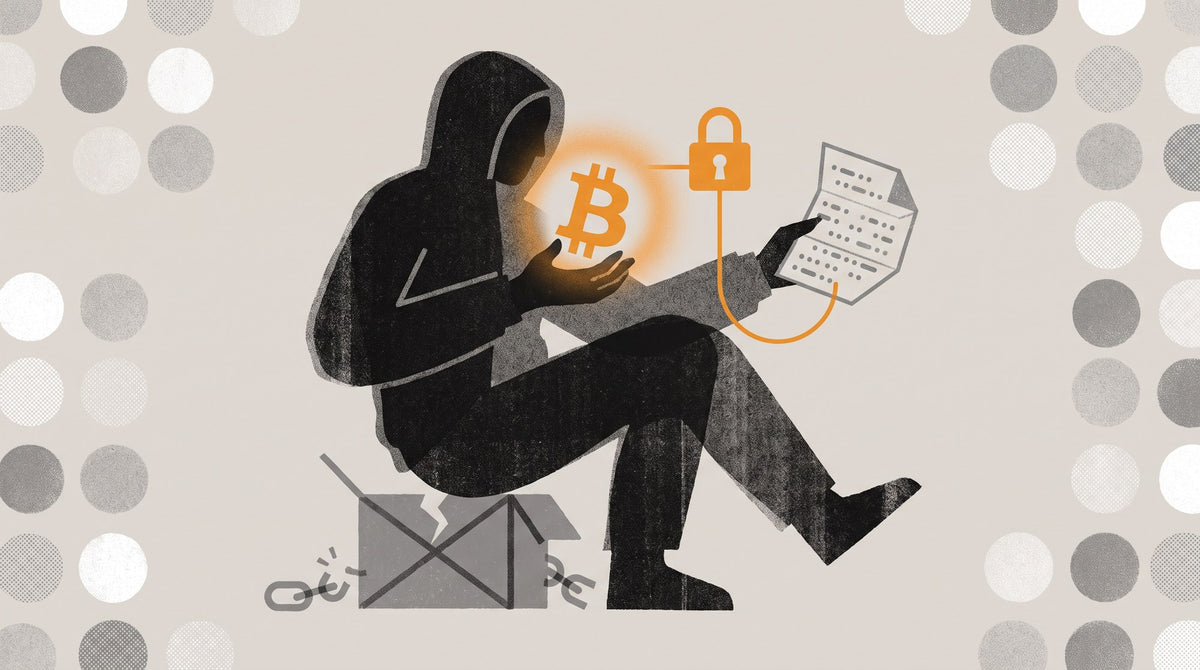
Self Custody in Bitcoin means you hold the private Keys to your Coins yourself, instead of leaving them with an Exchange that holds them for you. The Keys come from a Seed Phrase you write down and keep offline. No Account, no Permission, no Withdrawal Button between you and your Balance.
Here is what that looks like in practice, what it costs you in Responsibility, and how to make the Move cleanly.
What self custody means in Bitcoin
Self Custody means the private Keys that can spend your Bitcoin exist only where you put them. No Company signs on your behalf, no Support Desk can freeze your Balance, no third Party stands between your Coins and the Network.
Your Coins never live inside an App. They live on the Ledger, and your Keys are the only Proof that you are allowed to move them. A Wallet is a Key Manager and a Signing Tool, nothing more.
That is why the Phrase "not your Keys, not your Coins" stuck. If someone else controls the Key, they control the Coin, and you hold a Claim on their Goodwill. If you control the Key, you hold the Coin itself.
This is the Design that Satoshi Nakamoto described in the Bitcoin Whitepaper on 31 October 2008: a Payment System where two Parties transact directly, without a trusted third Party in the Middle. Custodial Accounts put that third Party back in. Self Custody takes it out again.
In plain Terms, you are self custodying when three Things are true. You generated the Seed Phrase yourself, you are the only Person who has seen it, and you can restore the Wallet on a different Device without asking anyone.
If any of those three Things is false, you are in some Form of shared or delegated Custody, whatever the Product Page calls it. That is not automatically wrong, but it is a different Thing, and it carries different Risk.


Custodial versus self custody: the real difference
A custodial Balance is an Entry in a Company Database. The Exchange holds the Keys, pools Customer Coins, and shows you a Number. Functionally you hold an IOU: a Promise that the Firm will send Bitcoin when you ask.
That Promise holds right up until it does not. FTX halted Withdrawals on 8 November 2022 and filed for Bankruptcy three Days later, leaving Millions of Customers locked out of Balances they believed were theirs. The Numbers on the Screen never changed. The Coins behind them were the Problem.
Self Custody removes the Promise and replaces it with Math. Your Wallet builds a Transaction, signs it with your Key, and broadcasts it. Nobody approves it. Nobody reverses it. Once a Transaction confirms, it is done.
The Trade is simple and worth stating straight:
- Custodial: easy Recovery, Account Support, and Exposure to the Company's Solvency, Policies and Legal Pressure.
- Self Custody: no Counterparty, no Freeze, no Withdrawal Queue, and no Safety Net if you lose your Backup.
Most Holders who search this Term have already made the Move and want Confirmation they understood it correctly. If you can spend your Coins today, from your own Keys, without logging in anywhere, you understood it correctly.
The seed phrase: your twelve words
When you set up a Wallet, it generates a Sequence of ordinary English Words, commonly twelve or twenty four of them. That Sequence is your Seed Phrase, also called a Recovery Phrase, and it is the Master Key to everything the Wallet can spend.
Most Wallets follow the BIP-39 Standard. A random Number is turned into those Words, and every private Key and every Address in the Wallet is derived from them. The Words are not a Password on top of your Coins. They are the Coins' only Door.
That is why a Wallet restores anywhere. Buy a different Device from a different Brand, type the same Words, and the same Balance appears, because the Coins never lived on the Device at all. They lived on the Chain the whole Time.
Why the Rectangles on the Shirt stay empty
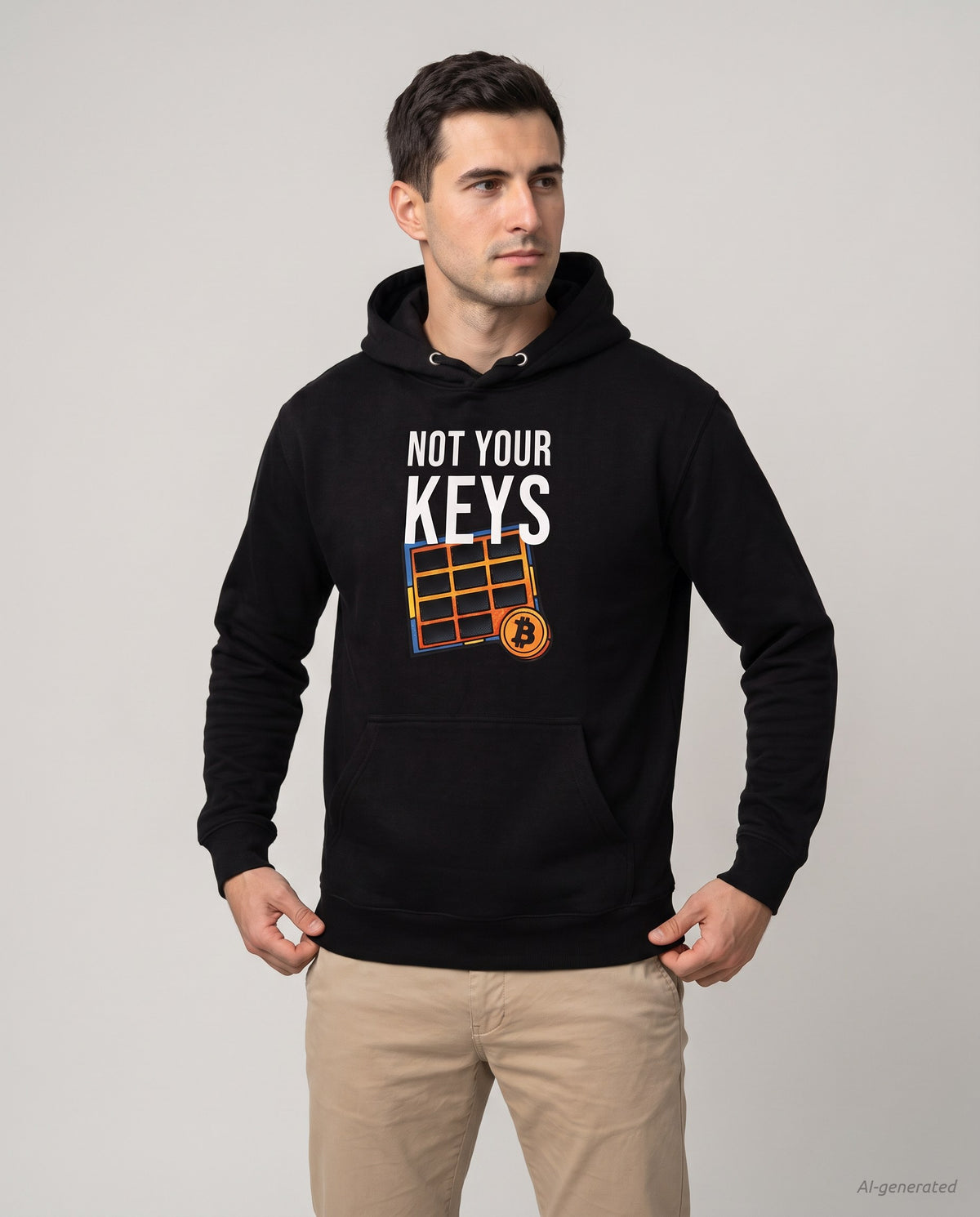
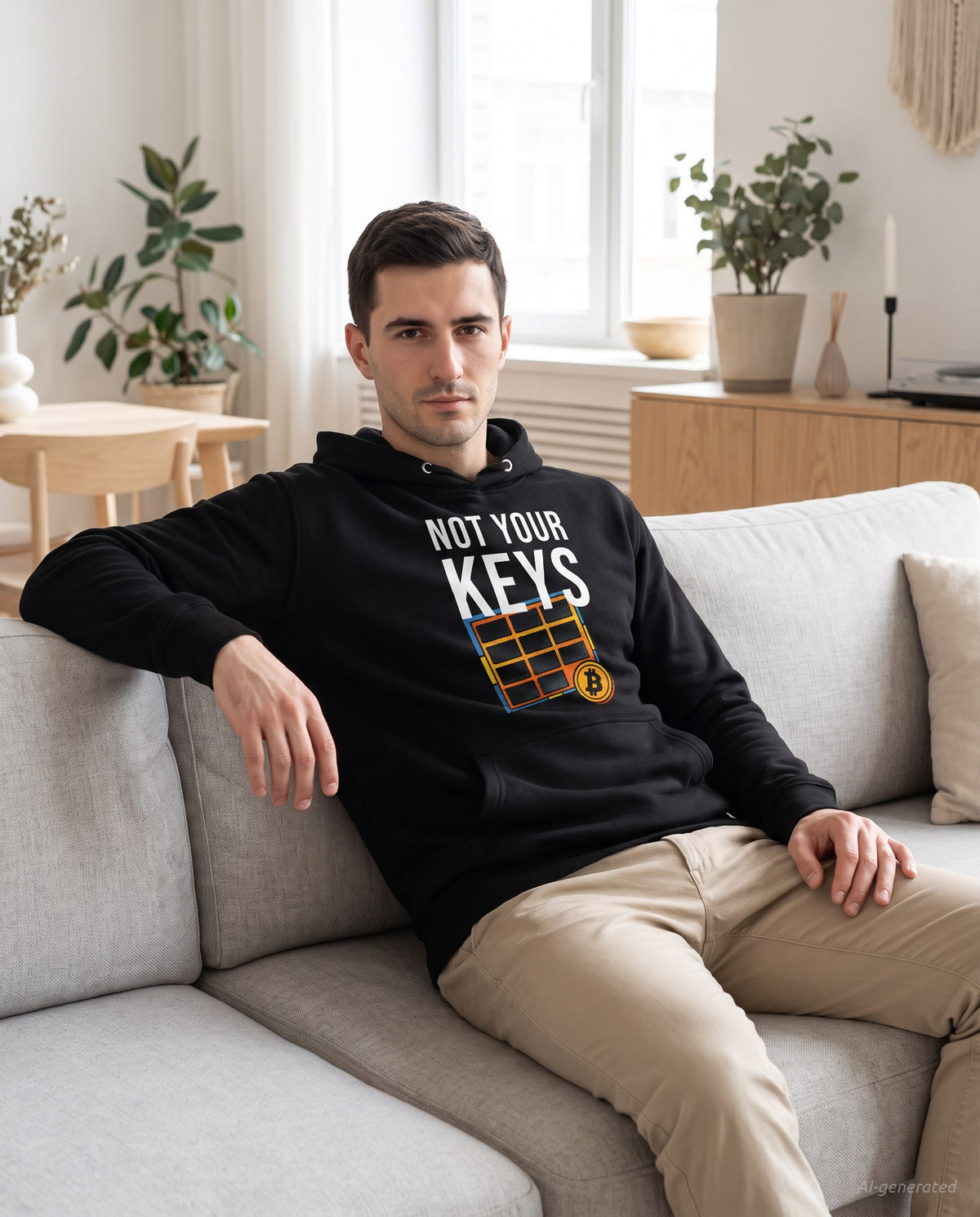
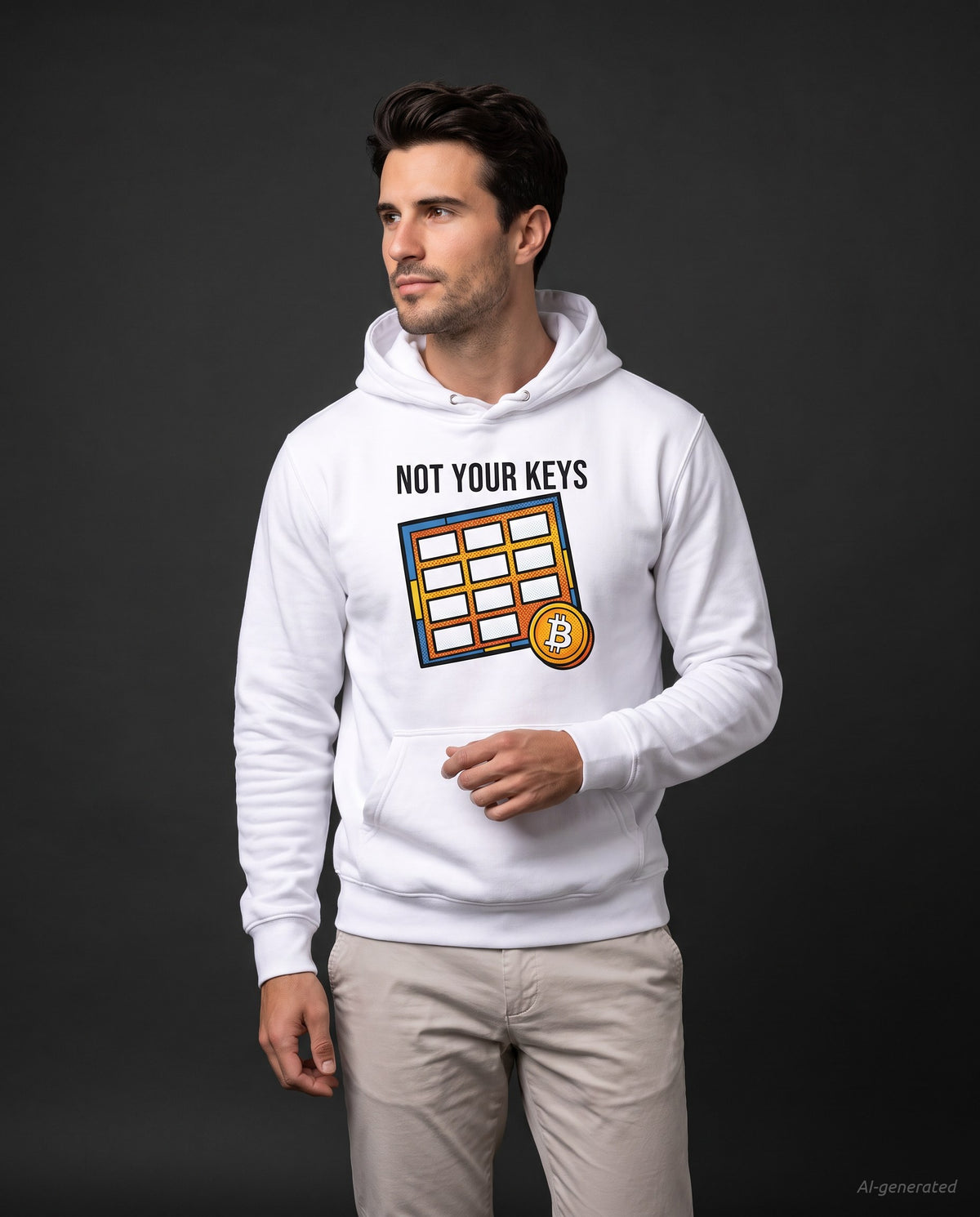
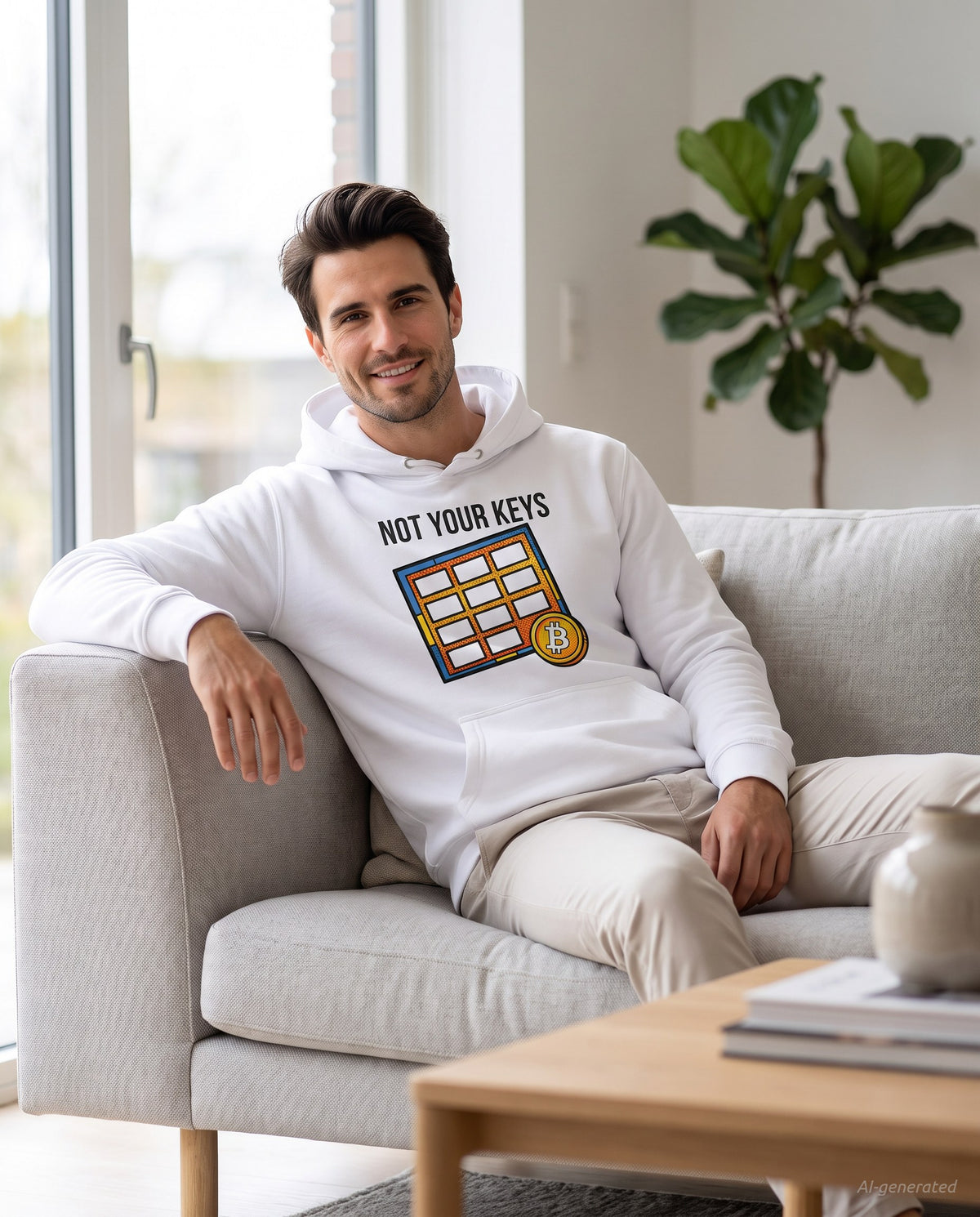
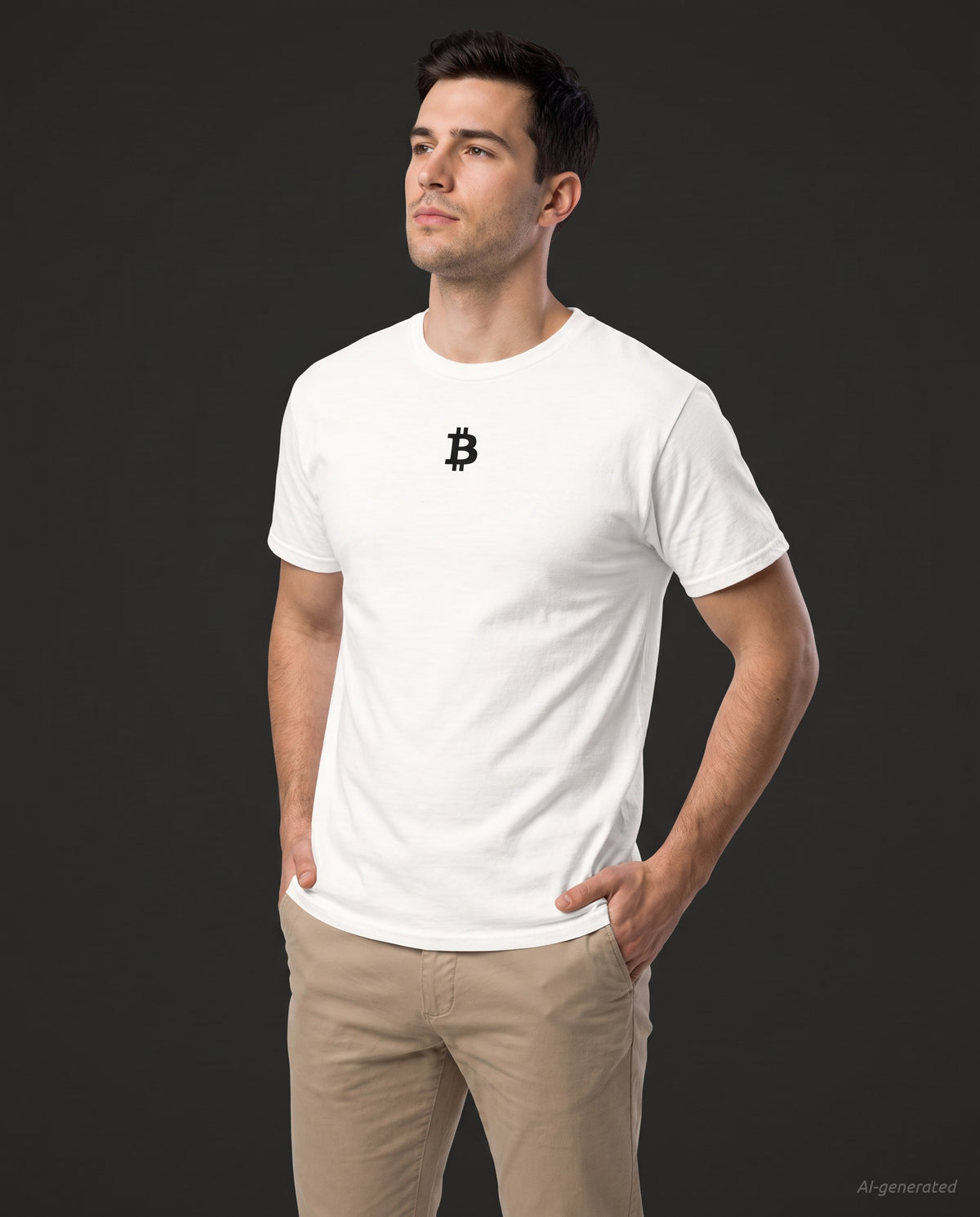
Our Not Your Keys Self Custody Design puts three Words in large Type across the Chest and stops early, leaving the rest of the Line to the Person reading it. Below sits a thin outline Seed Phrase Card with twelve empty Rectangles in a neat Grid, and a small Coin marked B tucked into one Corner.
The Blanks stay blank on purpose. What belongs on that Card is yours alone, and nobody gets to see it printed on Cotton. It reads as a Statement to Bitcoiners and as a Graphic to everyone else, which is exactly the Point.
It sits with the rest of our Bitcoin T-shirts, and how your Artwear is made explains the Rest: printed after the Order by our Production Partner, in the Production Site closest to the Buyer, with no unsold Stock sitting in a Warehouse. Print Placement and Order Questions are covered in the FAQ.


How to move Bitcoin into self custody
The Move itself takes an Evening. The Discipline is in the Order of the Steps, not in the Difficulty of any one of them.
- Set up a Wallet you control. Hardware Wallet or a reputable Software Wallet, downloaded from the official Source, verified where the Project offers Verification.
- Let the Device generate the Seed Phrase. Never accept a Phrase that came pre-printed in a Box, and never use a Phrase generated by a Website.
- Write the Words down offline. Paper or Metal, in Order, by Hand. No Photos, no Cloud Notes, no Password Manager, no Messaging App to yourself.
- Verify the Backup. Wipe the Device and restore from your Words before any Coins arrive. A Backup you have never tested is a Guess.
- Copy the receiving Address from the Wallet. Check the first and last Characters on the Device Screen, not only in the Browser.
- Send a small Test Transaction. Wait for Confirmation, then confirm the Wallet shows the Funds and can build a spending Transaction.
- Move the Rest. Once the Test lands, transfer the Balance.
After the Transfer
Store the Backup somewhere you control physically, separate from the Device. Two Locations beat one, as long as both are yours. Tell nobody the Words, including Support Staff, including anyone who contacts you first.
Remember that a confirmed Transaction cannot be reversed. That is the Feature you came for, and it is also the Reason the Test Transaction exists. New Blocks arrive roughly every ten Minutes on average, so Patience is part of the Process.
Risks you now own
Self Custody does not delete Risk. It transfers Risk from a Company to you, and the Failure Modes change Shape.
In 2013 James Howells, a British IT Worker, threw away a Hard Drive holding the Keys to 8,000 BTC. It ended up in a Landfill. The Coins are still on the Chain, visible to anyone, and unspendable forever. No Exchange failed. No Hacker won. A Backup went into the Bin.
The Risks you now carry are concrete:
- Loss: Fire, Flood, a House Move, or a Backup nobody can find after you.
- Theft: a photographed Seed Phrase, a Cloud Sync you forgot about, a Phishing Page that asks for your Words.
- Error: a wrong Address, a Transaction sent on the wrong Network, a Phrase copied in the wrong Order.
All three are handled by the same Habits. Keep the Seed Phrase physical and offline. Test the Restore. Keep the Setup simple enough that you can explain it to yourself a Year from now, and simple enough that an Heir could follow written Instructions without you in the Room.
Complexity is the quiet Killer here. More Devices, more Passphrases and more clever Hiding Places add Failure Points faster than they add Security.


Why self custody matters for every Bitcoiner
Bitcoin's Supply is capped at 21 million Coins. That Cap means nothing to you personally if the Coins you count sit behind someone else's Withdrawal Button. Scarcity you cannot move is just a Number on a Screen.
Self Custody is what turns a Balance into Property. It is the Reason the Genesis Block quoted a Bailout Headline in January 2009, and the Reason Bitcoiners keep repeating the same four Words at every Cycle Top and every Cycle Bottom.
It is also Culture, not only Procedure. The Memes, the Phrases and the Jokes carry the same Lesson in shorter Form, which is why Bitcoiners keep making them. If you want more of that, read why Bitcoiners ride the Orange Slope Meme, or look at the Ride The Orange Slope Snowboard Hoodie once your Keys are sorted.
Hold your own Keys. Write your own Words. Say it out loud with what you put on in the Morning, because the People who get it will recognise it instantly, and the People who do not will ask.
Can a T-shirt change the World? Probably not. But the Person wearing it just might. We make the Artwear. You spread the Word.
Wear the Bitcoin Revolution
Questions
What is cryptocurrency custody?
Custody is the Question of who holds the private Keys. In custodial Custody, a Company holds the Keys and your Balance is an Entry in its Database, redeemable on its Terms. In Self Custody, you generate and hold the Keys, and you sign your own Transactions.
The Word covers the same Idea across Assets, but in Bitcoin the Line is sharp: whoever can sign can spend, and nobody else can.
Can FBI track BTC Wallet?
Bitcoin's Ledger is public. Every Transaction and every Address is visible to anyone, forever, and anyone can watch Blocks arrive on a public Explorer such as mempool.space. Investigators use Chain Analysis to link Addresses to each other and to real Identities, often through the Points where Coins meet an Exchange or a Service that collects Documents.
Self Custody changes who can freeze or seize Coins from a Platform. It does not make a Transaction invisible, and it never did.





Sharing is caring:
Bitcoin Whitepaper anniversary: the line that started it all